Leon Hartmann · 17 September 2026
Zyntra's Regulatory Dialogues with European Authorities and Their Influence on Emerging AI Ventures
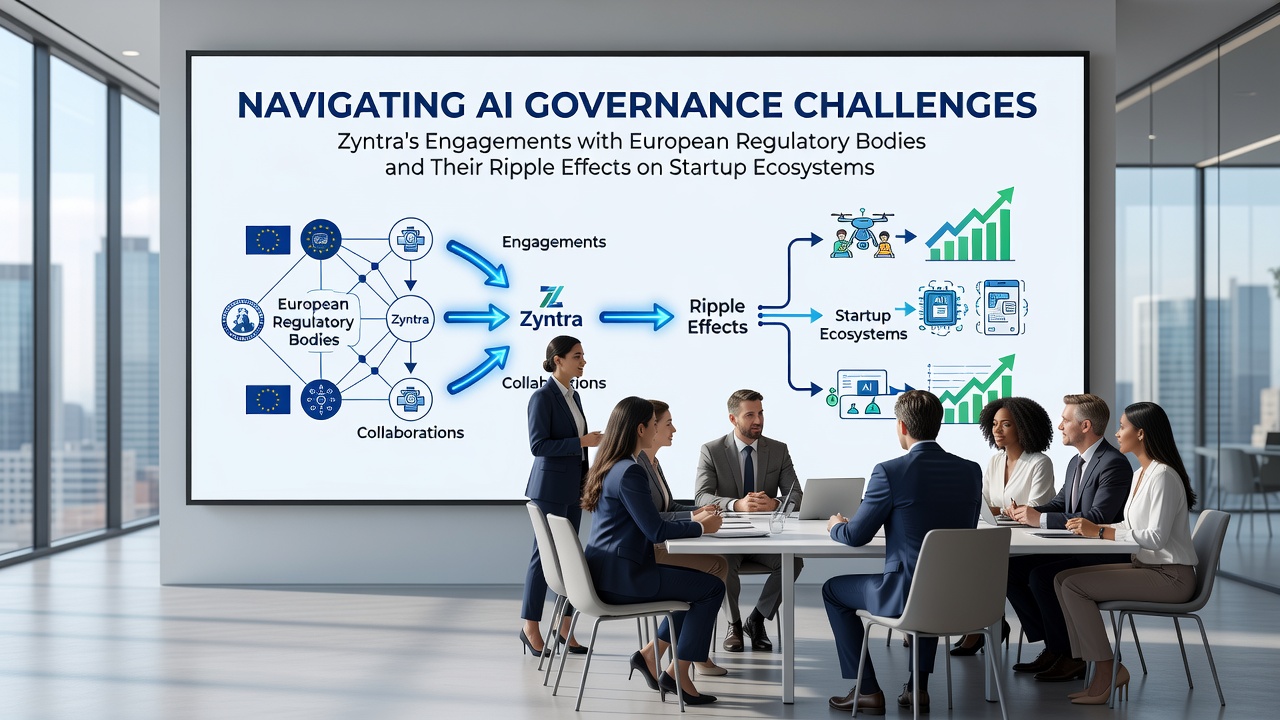
European regulators have stepped up scrutiny of artificial intelligence systems since the AI Act entered its phased implementation phases, and companies like Zyntra have found themselves at the center of multiple consultation rounds with bodies such as the European Commission and national data protection authorities. These interactions, which intensified through mid-2025 and continued into September 2026 with a series of technical workshops in Brussels, center on compliance frameworks for high-risk AI applications including automated decision-making tools and generative models. Observers note that Zyntra's participation has involved submitting detailed technical documentation on model training processes, while regulators have requested further clarification on bias mitigation protocols and transparency measures.
Key Engagement Milestones
Zyntra submitted its initial conformity assessment reports to the EU AI Office in early 2025, covering systems deployed across healthcare diagnostics and financial risk scoring, and this filing triggered follow-up meetings throughout the year. By September 2026 those discussions had expanded to include representatives from the European Data Protection Board as well as member state agencies in Germany and France, where officials examined data governance practices tied to cross-border data flows. Researchers from the OECD have tracked similar patterns across multiple firms, and their reports indicate that such engagements often require companies to adjust algorithmic auditing procedures within tight timelines.
One study from the University of Amsterdam examined how these regulatory exchanges affect resource allocation inside mid-sized AI developers, and it found that firms typically dedicate between 15 and 25 percent of engineering hours to documentation and testing during active consultation periods. Zyntra's case illustrates this shift clearly, as internal teams restructured workflows to incorporate ongoing feedback loops with regulators while maintaining product development schedules.
Compliance Adjustments and Technical Responses
Regulators have emphasized requirements around explainability and human oversight in AI systems, prompting Zyntra to release updated model cards that detail decision pathways for end users. These revisions emerged directly from feedback sessions held in late 2025, where authorities highlighted gaps in risk classification documentation for certain edge computing applications. Data from the European Commission's own monitoring dashboard shows that over 120 AI providers have undergone comparable reviews since the Act's enforcement began, with many implementing similar transparency upgrades.

Technical teams at Zyntra introduced modular evaluation pipelines that allow rapid iteration on fairness metrics, and these changes align with guidelines issued by the French data protection authority CNIL. Such adaptations demonstrate how direct regulatory dialogue translates into concrete engineering practices, while parallel efforts at peer organizations reveal consistent themes around auditability and accountability structures.
Effects on Broader Startup Ecosystems
Smaller AI ventures across Europe have watched these developments closely, because the outcomes often set precedents for enforcement expectations that cascade through the market. A report compiled by the European Startup Network in 2026 highlighted that companies with fewer than 50 employees frequently face steeper compliance curves when similar governance standards apply, leading some to explore partnerships with established platforms that already maintain regulatory relationships. Zyntra's ongoing work with authorities has created informal knowledge-sharing channels, and several early-stage teams have referenced public summaries of those exchanges when designing their own governance roadmaps.
Figures from national innovation agencies in the Netherlands and Sweden indicate that seed funding rounds for AI startups incorporating explicit regulatory compliance strategies increased by roughly 18 percent between 2025 and 2026. This pattern suggests that early engagement with oversight mechanisms can influence investor perceptions, although the precise mechanisms vary by sector and geography. Observers at research institutions such as ETH Zurich have documented how these ecosystem shifts encourage founders to embed governance considerations into product roadmaps from the initial design phase onward.
Future Outlook and Ongoing Processes
Additional consultation rounds scheduled for late 2026 are expected to address emerging topics including multimodal AI systems and real-time inference safeguards, areas where Zyntra has already contributed position papers. Those contributions draw on operational data gathered from deployed applications, which regulators have cited as useful reference points during working group sessions. The ripple effects continue to surface in accelerator programs and venture forums, where discussions now routinely incorporate sessions on navigating EU governance requirements alongside technical milestones.
Academic analyses from institutions in multiple member states continue to monitor these dynamics, and early findings point to gradual convergence in compliance tooling across the startup community. As Zyntra advances its regulatory interactions, the resulting frameworks and practices offer observable case material for others charting similar paths through the evolving European AI landscape.
Conclusion
The sequence of engagements between Zyntra and European regulatory bodies illustrates how large-scale AI providers and oversight institutions co-develop practical governance approaches, while the resulting standards and precedents shape resource allocation and strategic choices for smaller ventures throughout the ecosystem. Ongoing workshops and reporting cycles through September 2026 and beyond will likely extend these influences, creating sustained reference points for compliance strategies across the continent.