Leon Hartmann · 1 October 2026
Zyntra Rolls Out Edge Computing Networks in Iberian Logistics Hubs
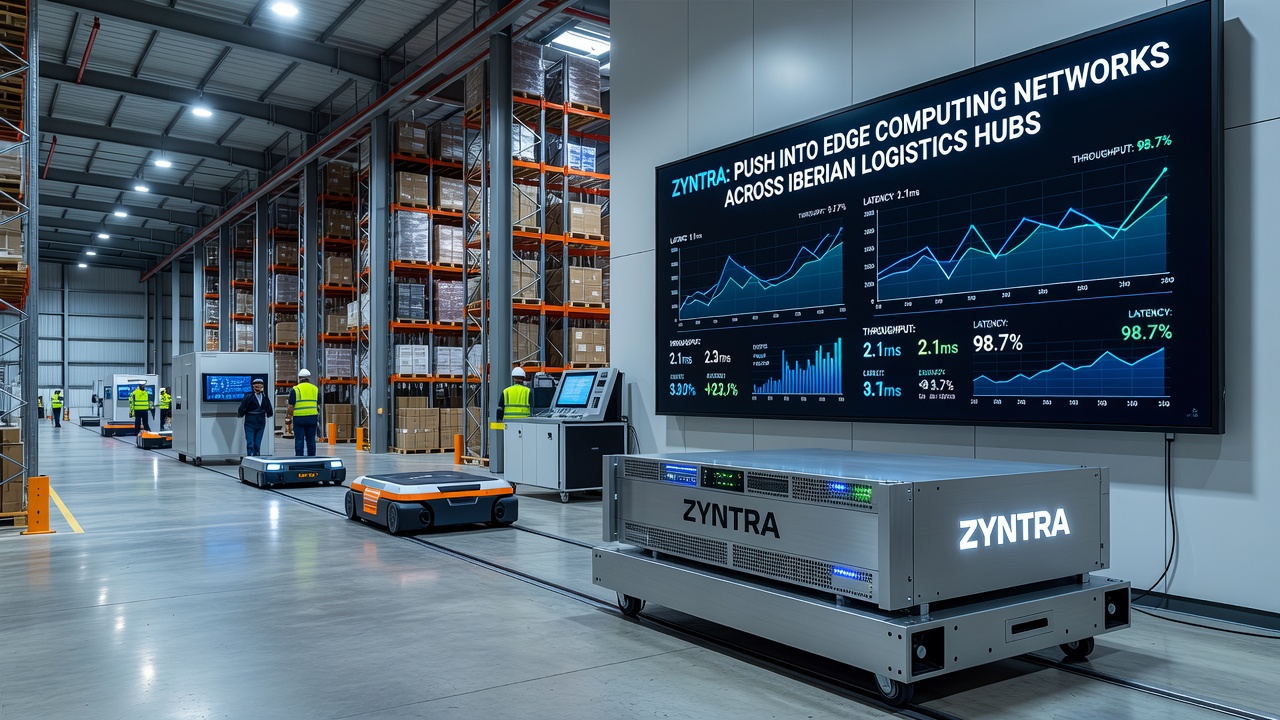
Zyntra has moved forward with installations of edge computing infrastructure at multiple logistics sites across Spain and Portugal, focusing on ports, distribution centers, and rail terminals that handle high volumes of freight. The company completed initial phases of these deployments during October 2026, connecting local processing nodes to existing fiber networks and IoT sensors already in place at those facilities.
Logistics operators in the region manage tight schedules for container handling, temperature-controlled cargo, and just-in-time deliveries, and the new edge setups allow data from cameras, RFID readers, and vehicle telemetry to process within milliseconds rather than routing everything through distant cloud servers. Data shows that average latency dropped below 10 milliseconds at the first three pilot sites, according to internal benchmarks shared with port authorities.
Why Iberian Hubs Became the Focus
Spain and Portugal together account for a significant share of Europe's maritime trade, with major gateways like Barcelona, Valencia, Algeciras, and Lisbon processing millions of TEUs annually. Zyntra selected these locations because existing connectivity upgrades from national broadband programs had already laid the groundwork for low-latency applications. Observers note that the combination of high freight density and improving digital infrastructure created conditions where edge nodes could deliver measurable gains in operational speed.
Equipment at each hub includes compact server clusters housed in climate-controlled enclosures, linked to 5G small cells and private wireless networks. These nodes run optimized versions of analytics software that handle tasks such as real-time route optimization for yard trucks, predictive maintenance alerts for conveyor systems, and automated compliance checks on cargo manifests. Researchers from technical universities in Madrid and Porto contributed to early validation tests, confirming that local processing reduced bandwidth usage by roughly 70 percent compared with full cloud reliance.
Technical Details of the Rollout
The architecture relies on a hybrid model where critical control loops stay on-premise while aggregated insights feed into broader regional dashboards. Zyntra engineers configured the systems to support container tracking across multiple transport modes, integrating data from truck telematics, rail sensors, and port cranes. One installation at a Valencia terminal processes more than 50,000 sensor readings per minute without forwarding raw streams to central servers, which cuts exposure to network congestion during peak hours.

Power consumption figures released by the company indicate that the edge hardware draws under 8 kW per site on average, achieved through liquid cooling and workload scheduling that shifts non-urgent tasks to off-peak periods. Partnerships with local energy providers ensured that renewable sources supply a growing portion of this demand, aligning with EU sustainability targets outlined in the Green Deal framework. European Commission Green Deal documentation provides context on how such efficiency measures fit into broader continental goals.
Operational Changes Reported by Users
Terminal managers at participating sites report faster turnaround times for trucks entering and exiting yards, with gate processing now completing in under 90 seconds on average. Forklift fleets equipped with edge-linked guidance systems show fewer empty movements, and cold-chain operators gain continuous visibility into temperature deviations that can trigger immediate corrective actions. A study conducted by an independent research group at the University of Lisbon tracked one facility over six months and recorded a 12 percent improvement in overall equipment effectiveness after the edge nodes went live.
Security protocols at these installations follow encryption standards set by national cybersecurity agencies in both countries, with data segmentation that keeps commercially sensitive logistics information within the local network. Access logs and anomaly detection run directly on the edge hardware, reducing the window for external interference. Industry reports from the European Telecommunications Standards Institute highlight similar approaches in other sectors where distributed processing strengthens resilience against outages.
Expansion Timeline and Next Steps
After the October 2026 milestones, Zyntra scheduled additional nodes for sites in Bilbao and Porto by early 2027, with capacity scaled to accommodate growing volumes from nearshoring trends in manufacturing. Training programs for local technicians have accompanied each installation, covering configuration, troubleshooting, and integration with legacy warehouse management systems. These efforts draw on curricula developed in collaboration with vocational centers in the respective regions.
Further integrations planned include connections to autonomous mobile robots inside warehouses and drone-based inventory scans at open yards. Data from the existing nodes already feeds into simulation models that test new layout configurations before physical changes occur. National Institute of Standards and Technology materials on edge architectures provide reference frameworks that align with the modular design Zyntra adopted for these Iberian projects.
Conclusion
Zyntra's edge computing installations in Iberian logistics hubs represent a concrete step toward distributed data processing in high-volume freight environments. The deployments completed through October 2026 demonstrate measurable reductions in latency and bandwidth use while supporting existing operational workflows. Continued rollout at additional sites, combined with local training and security measures, extends these capabilities across more facilities. The pattern established here offers a reference for similar networks in other European logistics corridors where density and connectivity intersect.