
Henrik Braun · 29 October 2026
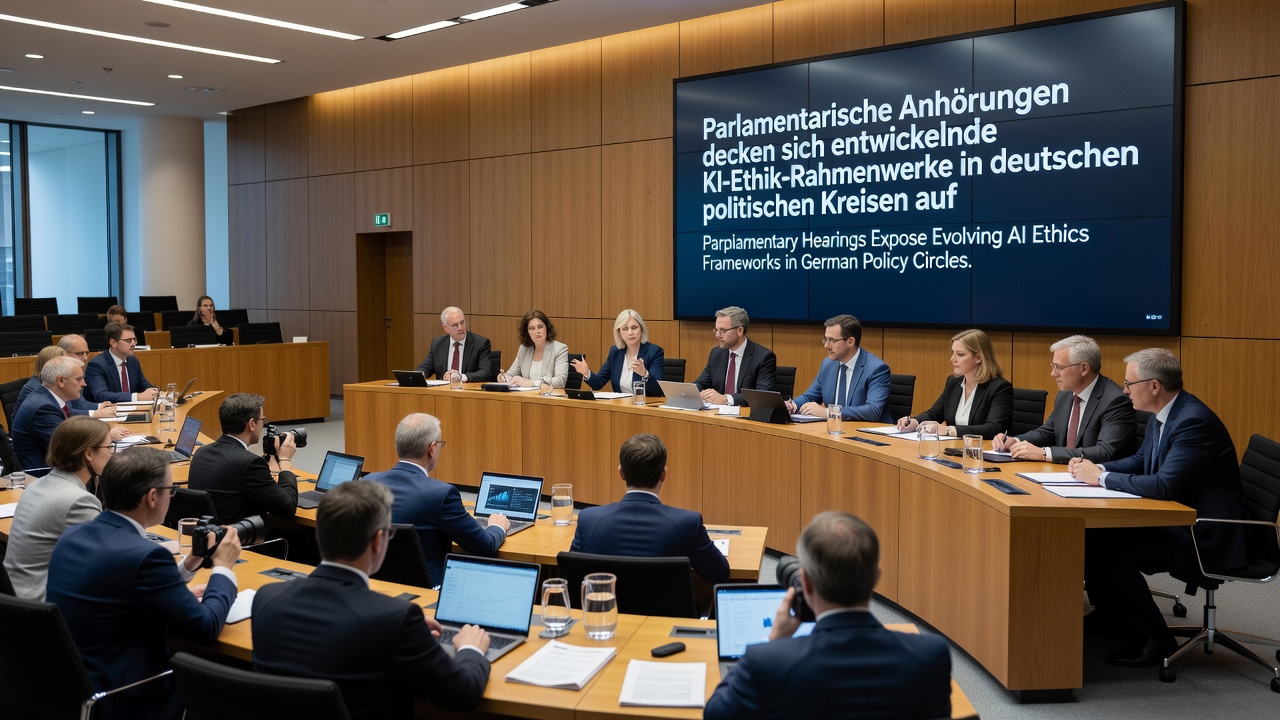
Parliamentary Hearings Expose Evolving AI Ethics Frameworks in German Policy Circles
Parliamentary hearings held in the German Bundestag throughout October 2026 brought renewed attention to the country's ongoing adjustments in AI ethics guidelines as lawmakers examined how existing policies align with rapid technological advances and broader European Union directives.
These sessions featured testimony from government officials, industry representatives, and academic researchers who outlined shifts in regulatory priorities since the implementation phases of the EU AI Act began taking effect across member states.
Context of Recent Hearings
Observers note that the October 2026 proceedings built directly on earlier Bundestag inquiries from 2024 and 2025, where initial focus rested on risk classification systems for high-impact AI applications in sectors such as healthcare, transportation, and public administration. Data from the German Federal Ministry for Economic Affairs and Climate Action indicates that over 120 AI-related legislative proposals reached committee review during this period, with ethics provisions forming a central thread across multiple drafts.
Committee chairs emphasized the need to balance innovation incentives against safeguards for data privacy and algorithmic transparency while experts presented case studies from pilot programs in automated decision-making tools used by federal agencies.
Key Developments in Ethics Frameworks
Evidence presented during the hearings showed that German policy circles have moved toward more iterative approaches to AI ethics, incorporating feedback loops from real-world deployments rather than relying solely on upfront compliance checklists. Researchers from institutions including the Fraunhofer Institute detailed how audit mechanisms for bias detection have expanded to cover generative AI models, with updated protocols requiring periodic reassessments every six months for systems classified at higher risk levels.
Figures from the European Commission's 2026 AI monitoring report reveal that Germany accounted for approximately 22 percent of all notified high-risk AI systems across the EU bloc in the first half of the year, underscoring the scale of domestic activity in regulated categories. Lawmakers discussed proposals to integrate ethical impact assessments into public procurement processes, drawing on models already tested in Scandinavian countries and referenced through OECD guidelines on trustworthy AI.
One notable exchange involved representatives from the German Research Center for Artificial Intelligence who demonstrated updated frameworks for accountability in autonomous systems, highlighting how liability rules might evolve to address scenarios where AI agents operate across borders within the single market.
Stakeholder Input and Data Insights
Industry voices at the hearings stressed the importance of harmonized standards that avoid duplicative reporting requirements between national and EU-level bodies. Trade associations submitted written evidence showing that compliance costs for mid-sized AI developers had risen by 18 percent year-over-year, prompting calls for streamlined certification pathways that maintain ethical oversight without stifling smaller entrants.
Academic contributors referenced longitudinal studies tracking public trust metrics in AI technologies, with surveys conducted by the University of Bonn indicating stable but regionally varied acceptance rates across federal states. These findings informed discussions on targeted education initiatives designed to improve digital literacy among both policymakers and the general population.
Integration with Broader EU Policies
Participants examined how German frameworks interface with ongoing EU efforts to establish common evaluation benchmarks for AI safety and fairness. References to work by the UK Centre for Data Ethics and Innovation appeared alongside contributions from Canadian research consortia, illustrating the cross-regional exchange of best practices that continues to shape national strategies.
Discussions also touched on emerging challenges in areas such as synthetic media detection and the ethical deployment of AI in defense-related applications, though details remained at the level of preliminary scoping rather than finalized recommendations.
Conclusion
The October 2026 parliamentary hearings provided a structured platform for reviewing progress on AI ethics frameworks within German policy circles, with testimony and supporting documentation pointing to incremental refinements in risk assessment, accountability measures, and stakeholder engagement processes. Information shared during these sessions aligns with documented trends in EU-wide regulatory development and offers a factual record of current directions in national implementation efforts.