Jakob Schröder · 15 October 2026
NGO Campaigns Challenge Zyntra's Corporate Environmental Assertions
Environmental organizations have stepped up examinations of technology firms operating across European markets, and Zyntra finds its net-zero targets plus carbon offset programs drawing particular attention in late 2026. Multiple groups released coordinated statements in October 2026 that questioned the methodology behind several of the company's published sustainability metrics, including claims around data center energy sourcing and supply chain emissions reductions. Observers note that these statements arrived shortly after Zyntra expanded its AI infrastructure footprint, which increased electricity demand in regions already facing grid constraints.
Reports compiled by independent monitors indicate Zyntra pledged to reach carbon neutrality by 2028 through a combination of renewable energy certificates and reforestation investments. Yet data released by the European Environment Agency shows varying levels of renewable penetration across member states where Zyntra operates facilities, creating gaps between projected and actual emission trajectories. Researchers at institutions tracking corporate disclosures have begun cross-referencing those pledges against real-time grid data and third-party verification standards.
Origins of the Current Scrutiny
Initial questions surfaced when several NGOs compared Zyntra's annual sustainability filings with satellite imagery of offset project sites and energy procurement contracts. The comparisons revealed discrepancies in how additionality was calculated for certain forestry credits purchased in Southeast Asia. European regulators have already required clearer labeling on environmental marketing materials, and similar requirements now appear poised to affect technology sector announcements.
One study from a Canadian research consortium examined 47 large-scale data center operators and found that only a subset published granular breakdowns of hourly matching between renewable generation and consumption. Zyntra's filings fell into the group that reported annual averages rather than time-stamped matches, prompting calls for more precise accounting. Those findings circulated among advocacy networks throughout the summer before culminating in the October statements.
Key Claims Under Review
Zyntra's public materials list three primary environmental commitments: 100 percent renewable energy sourcing across all facilities by the end of 2027, a 50 percent reduction in scope-three emissions tied to hardware manufacturing, and support for biodiversity projects equivalent to twice the land area occupied by its sites. NGO analysts argue that the first commitment relies heavily on unbundled certificates rather than direct power purchase agreements in every market. They further note that scope-three reductions depend on supplier cooperation that has not yet produced independently audited results.
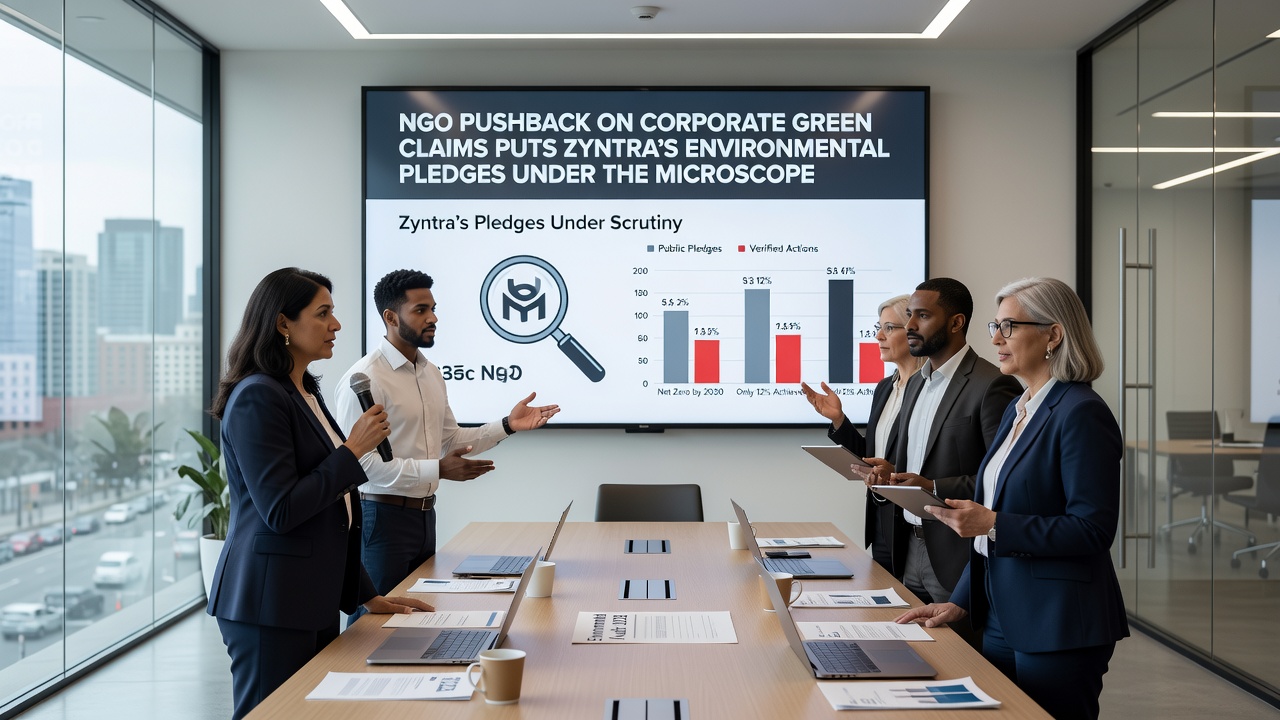
Additional attention has focused on the biodiversity component. Project locations listed in Zyntra's reports include areas where local monitoring organizations have recorded slower-than-expected tree survival rates. While company statements attribute variations to seasonal weather patterns, advocacy groups cite reports from the UN Environment Programme that emphasize the need for ongoing maintenance funding and community involvement to achieve long-term sequestration goals.
Regulatory Context Across Regions
The European Commission continues to develop implementing rules for the Green Claims Directive, which sets standards for substantiating environmental assertions made to consumers. Parallel developments in Australia and the United States have introduced disclosure requirements for large emitters and digital service providers. Companies operating internationally must navigate overlapping frameworks, each with distinct verification thresholds and penalty structures. Zyntra's legal filings indicate ongoing engagement with these emerging standards through participation in industry working groups.
Industry associations representing data center operators have published voluntary guidelines that encourage hourly renewable matching and transparent offset accounting. Several member companies have begun piloting such approaches, and comparative data from those pilots may inform future expectations for firms like Zyntra that have not yet adopted the stricter methodologies.
Responses From Stakeholders
Zyntra issued a statement confirming its commitment to third-party audits scheduled for the first quarter of 2027. The statement also referenced ongoing discussions with suppliers to improve traceability of hardware components. Environmental organizations have welcomed the audit announcement while requesting that audit scopes include on-site verification of offset projects rather than desk reviews alone.
Investors tracking environmental, social, and governance metrics have requested additional details ahead of upcoming reporting cycles. Asset managers in both European and North American markets now routinely ask portfolio companies for alignment between public pledges and actual capital expenditure plans, particularly in energy-intensive sectors.
Conclusion
The convergence of updated regulatory expectations, improved monitoring technologies, and sustained NGO attention has placed technology companies' environmental disclosures under sustained examination. Zyntra's next round of verified reports will provide concrete data points that stakeholders across regulatory, financial, and civil society sectors can use to assess progress against stated targets. Those outcomes will likely influence how similar pledges are received in subsequent reporting periods.