Ben Franke · 3 September 2026
From Acquisition to Innovation: Tracing the Path of Nordic AI Integration in Continental Tech Ecosystems
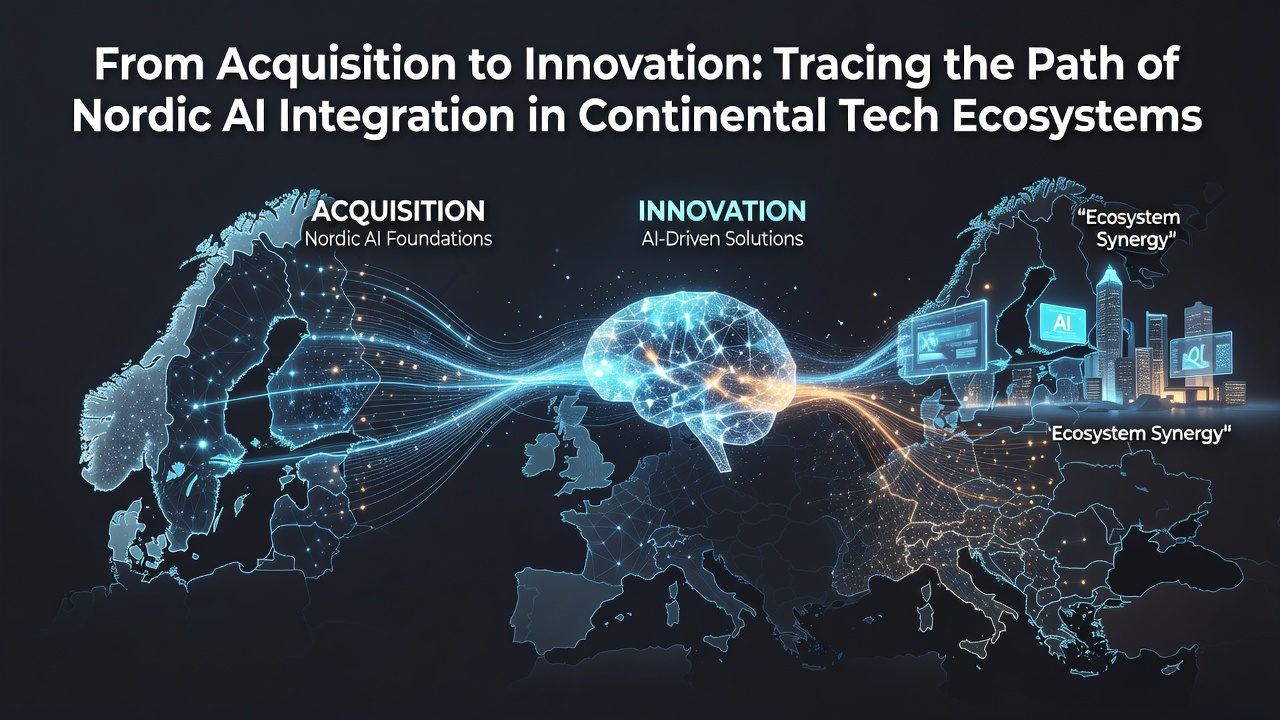
Nordic countries have built substantial expertise in artificial intelligence through decades of investment in data infrastructure, privacy frameworks, and academic research programs, and continental European firms have increasingly turned to acquisitions as a way to access those capabilities. Companies based in Sweden, Finland, and Denmark developed specialized AI tools in areas such as natural language processing, predictive analytics, and autonomous systems, while organizations in Germany, France, and the Netherlands sought to accelerate their own digital transformation efforts by purchasing established Nordic startups and research spin-offs. This pattern of cross-border consolidation has produced measurable shifts in how continental tech ecosystems develop and deploy AI applications.
Early Patterns of Nordic AI Development
Finland and Sweden established early advantages in AI research during the 2010s through coordinated national strategies that linked universities, public agencies, and private companies, and these efforts generated a pipeline of technologies ready for commercialization. Finnish institutions focused on edge computing and industrial applications, whereas Swedish teams emphasized ethical AI frameworks and large-scale data management, creating distinct but complementary strengths. Continental firms noticed these assets and began initiating acquisition discussions as early as 2018, seeking to bypass lengthy internal development cycles.
Acquisition Activity and Technology Transfer
Between 2020 and 2025 a series of documented acquisitions transferred Nordic AI assets into continental ownership structures, and several of these deals involved firms headquartered in Berlin, Paris, and Amsterdam. One prominent transaction saw a German automotive supplier purchase a Finnish startup specializing in sensor fusion algorithms, while a French telecommunications group acquired a Danish company focused on conversational AI interfaces. These purchases typically included not only intellectual property but also engineering teams that relocated or operated remotely, facilitating direct knowledge transfer. Data from national business registries indicate that such deals increased in frequency after the European Union introduced its AI Act, because continental companies sought proven compliance tools already developed in Nordic environments.
Integration Outcomes Across Continental Hubs
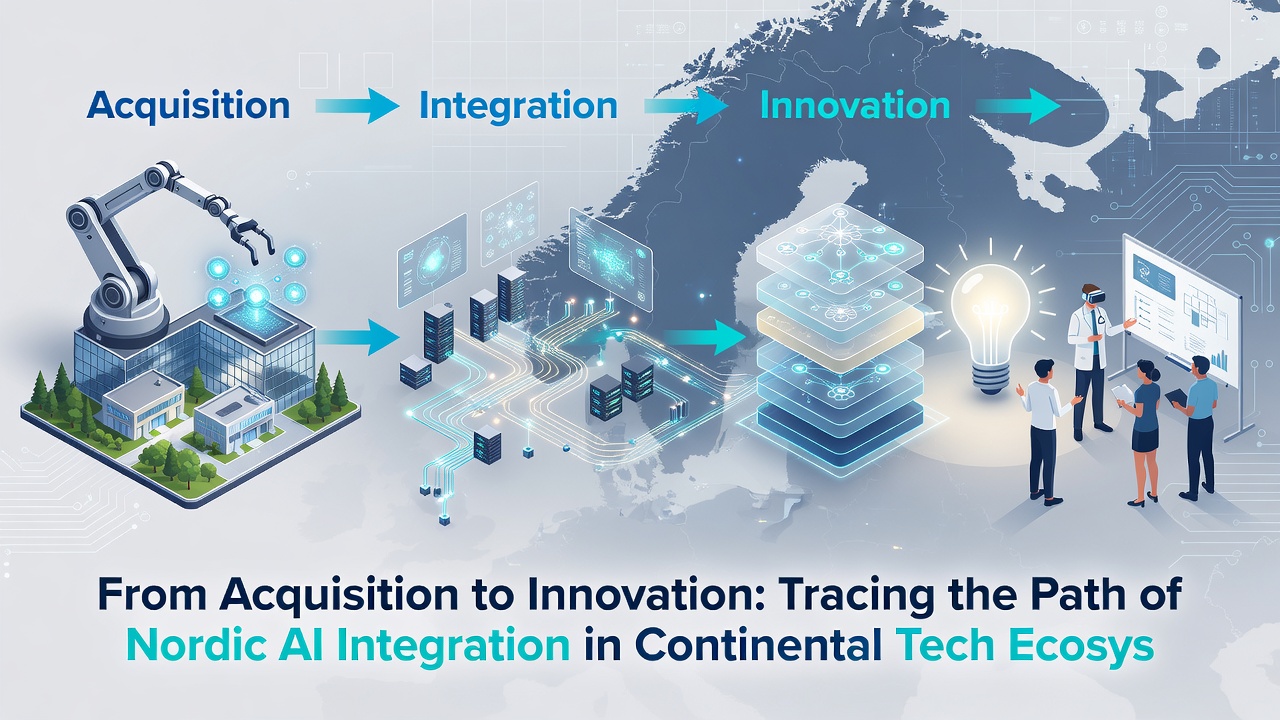
Once acquired, Nordic AI components have been embedded into larger continental platforms, and the results appear in sectors ranging from manufacturing to healthcare. German industrial groups have integrated Finnish edge AI models into factory automation systems, while Dutch logistics companies have adopted Swedish optimization algorithms for supply chain management. Researchers tracking these deployments report that integration timelines shortened by an average of 18 months compared with in-house development approaches, according to a 2025 study published by the Organisation for Economic Co-operation and Development. In September 2026 the European AI Alliance is scheduled to release updated benchmarks that will quantify further performance gains from these combined technologies.
Regulatory and Infrastructure Factors
EU regulatory frameworks have shaped the pace and structure of these integrations, and Nordic companies often possessed documentation practices that aligned readily with emerging continental standards. The European Commission's Directorate-General for Communications Networks, Content and Technology has published guidance that references Nordic examples of data governance, and firms that acquired such entities gained immediate access to tested compliance templates. At the same time, infrastructure differences between Nordic and continental networks required adjustments, particularly in latency optimization and energy efficiency standards, yet engineering teams from both regions collaborated to resolve these issues within existing project timelines.
Emerging Innovation Patterns
Post-acquisition innovation has produced hybrid solutions that combine Nordic algorithmic approaches with continental application domains, and several new patents filed in 2025 list inventors from multiple countries. French healthcare providers, for instance, have deployed AI diagnostic tools that originated in Swedish research and were refined through German clinical data partnerships. Academic observers note that these collaborations have increased cross-border co-authorship rates in AI journals, reflecting sustained knowledge exchange beyond the initial acquisition events. The pattern suggests that acquisition serves as an entry point rather than an endpoint for technology evolution.
Conclusion
Nordic AI assets have moved into continental tech ecosystems through a sequence of targeted acquisitions, and the resulting integrations have influenced product development cycles across multiple industries. Available data show that regulatory alignment, existing research strengths, and engineering mobility have supported these transitions, while scheduled 2026 reporting from European bodies will provide additional metrics on long-term outcomes. The trajectory continues to evolve as new collaborations form between the original Nordic teams and their continental counterparts.